



Cabana Stripe Pool Towels for Hospitality and Commercial Pool Facilities
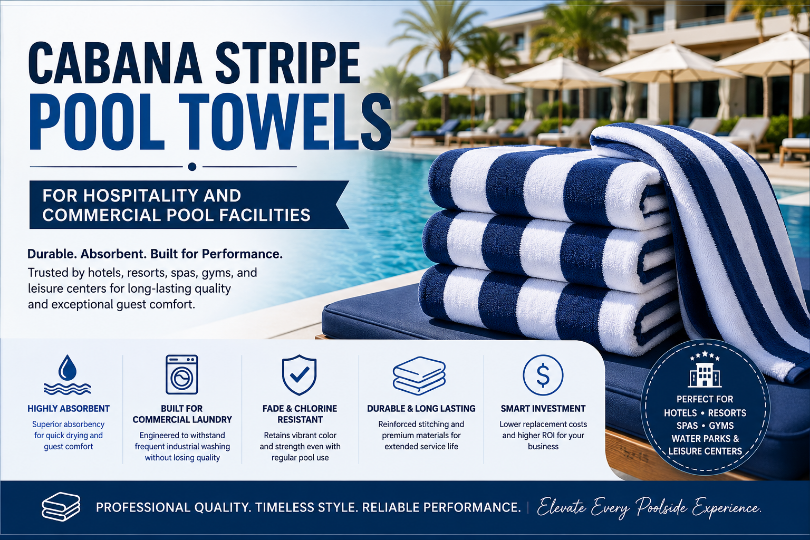
Cabana Stripe Pool Towels for Hospitality and Commercial Pool Facilities
Cabana Towels: Smart Choice for Commercial Pools
Cabana stripe pool towels are a sturdy and affordable option for hotels, resorts, spas, and gym facilities. Made to withstand rigorous commercial laundering, they retain their softness, absorbency, and color even after multiple washes. Their durability helps companies reduce replacement costs and increase operational efficiency. This commercial-grade pool towel delivers a better guest experience and stronger, long-term ROI in high-traffic pool areas.
Why Cabana Stripe Pool Towels Remain a Standard in Hospitality Operations
Visual Identity and Professional Presentation
Luxury bath towels have been a standard in the hospitality industry for years because they offer a neat, familiar, and well-kept look at the poolside. Usually, hotels, resorts, and beach clubs use striped towel patterns to align visually with other guest amenities and to create a sense of ‘high-end’ hospitality.
The striking stripe pattern also improves the visibility of towels around pool areas. This becomes a win for operations in a high-volume facility where towel pickup and inventory management are part of the maintenance routine.
Operational Advantages in High-Traffic Facilities
Commercial properties prioritize products that streamline their operations. Wholesale pool towels are a popular choice because they are easily identifiable, sortable, and manageable through commercial laundry runs.
Establishments that handle tens or hundreds of towels a week find uniform dimensions and appearance useful.
Bulk pool towels used in hospitality settings must balance guest comfort with operational efficiency. Items that retain their appearance after multiple uses help reduce replacement rates and provide better cost control in the long run.
Key Material Features of Commercial Pool Towels
Cotton vs Cotton-Blend Construction
The material composition greatly influences softness, absorbency, durability, and drying time. Hospitality companies tend to prefer cotton-rich towels, as they absorb moisture well and are more comfortable for guests.
Nevertheless, cotton-blend products are also popular in places such as schools and hotels, where the priority is getting towels dry quickly whilst ensuring they last.
In general, the procurement team will look at which towel fibers best withstand high traffic and regular washing, and which are most cost-effective to maintain. We are trying to strike a balance between comfort and usefulness.
GSM and Towel Weight Selection
In the hospitality industry, towel weight is usually determined by the company's style. High-end resorts could opt for heavier towels to enhance their guests' experience. In contrast, gyms and recreational centers might lean towards lighter ones to facilitate quicker turnover and reduce energy consumption during laundering.
Color Retention and Chlorine Resistance
Chlorine-resistant towels are permanently exposed to chlorine, UV light, and industrial detergents. Commercial purchasers and buyers in general assess color retention thoroughly before large-scale procurement.
Beach towels for hospitality use generally have dyeing processes and fabric finishing treatments designed to limit fading over time. Color and appearance are consistent, enabling facilities to maintain a professional look, even after multiple launderings.
Beyond appearance and comfort, long-term durability plays a major role in hospitality towel purchasing decisions.
Durability Factors That Influence Long-Term
Stitching Quality and Edge Reinforcement
Durability is the number one reason commercial textiles are chosen by their buyers. Reinforced stitching and strong edge hems add extra protection against fraying, ripping, and the degradation of fabric integrity through daily use.
Replacement costs can be significantly inflated by low-quality stitching in high-volume applications. Commercial towels are rigorously tested, and in addition to fabric quality and seam construction, the strength of reinforcement seams is evaluated.
Commercial Laundering Performance
These absorbent towels are routinely run through industrial laundry systems several times a week in hospitality and leisure settings. Towels that don’t withstand repeated cycles of commercial washing lead to operational hassles and more frequent replacements.
Resort pool towels are designed to retain their absorbency, shape, and softness even after repeated industrial laundering. This allows for a longer service life and better cost-per-use performance.
Shrinkage Control and Shape Retention
Dimensional stability is another key operating factor. Towel usability, uniformity of appearance, and inventory control can be affected by excessive shrinkage.
Towels designed for shrinkage control are what commercial customers typically look for, as consistent sizing makes reorders less complicated and more predictable from one order to the next.
First unit price rarely carries too much weight in commercial buying decisions.
Cost Efficiency in Bulk Purchasing
Evaluating Cost Per Use Instead of Unit Price
Hospitality companies frequently evaluate total value through a cost-per-use lens that accounts for the towel's lifespan, maintenance requirements, and replacement frequency.
Cheaper towels may reduce the purchasing budget initially, but if they deteriorate quickly under commercial laundering conditions, they can lead to higher costs down the line.
Inventory Planning for Seasonal Demand
Hotels, resorts, and spas often adjust their towel supply with the comings and goings of guests and the seasons. A business can use bulk buying to maintain a consistent inventory during busy periods.
A steady supply of towels also helps keep the chaos down, even during peak periods when laundry operations are running at full capacity.
Supplier Consistency and Reorder Reliability
Commercial buyers expect suppliers to offer consistent sizing, stripe patterns, color matching, and product availability for repeat orders.
Consolidated purchasing enables organizations to deliver a consistent guest experience and better manage inventory and replacement stock.
Compliance and Maintenance Considerations
Hygiene Standards in Shared Pool Environments
Shared hospitality environments call for stringent hygiene management. Pool towels need to withstand regular sanitizing, such as exposure to chlorine, without damaging the fabric or reducing absorbency.
Laundry Handling and Maintenance Best Practices
Under the right conditions, proper laundry care can significantly affect a towel's longevity.
Structured washing processes are often adapted in hospitality to protect fibers from unnecessary damage, retain moisture absorption, and prevent color fading or discoloration.
Recommended procedures are to use controlled drying temperatures, use a suitable detergent, and implement a towel rotation scheme to minimize uniform wear and tear on your supply.
Best Commercial Applications for Beach Towels
Hotels and Resorts
The hotel and resort use of bulk towels is a practical and comfortable combination for guests. Their iconic design lends an upscale poolside presentation, while their high functionality ensures they meet the demands of a bustling hospitality environment.
Spas, Gyms, and Wellness Centers
Towels need to withstand continuous wetness and are washed frequently in a spa. Wellness Towel - Striped Pool Towels are ideal for these settings, as they strike the right balance of durability, absorbency, and ease of care.
Water Parks and Recreational Facilities
Large leisure centers tend to select towels suitable for high user turnover and long service life. Tough, commercial-quality towels reduce replacement frequency while providing reliable service to visitors in high-volume facilities.
Long-Term Value
Investing in high-quality cabana stripe pool towels helps hospitality businesses improve guest comfort, reduce operational costs, and maintain a professional poolside appearance.
For hotels, resorts, gyms, and wellness centers, durable hospitality pool towels deliver long-term value, operational efficiency, and a stronger return on investment.